

The Decline of FF/FG Continues
Fianna Fáil and Fine Gael came out of both contests badly damaged. Their combined vote fell sharply, most of all in Dublin Central, where they recorded the lowest combined vote they have ever managed in the constituency. This is not a temporary wobble but part of a long decline for the two parties that have governed the Southern state for a century. Their problem is not bad candidates or weak campaigns, it is that the housing crisis, the cost of living, collapsing public services and deep inequality have worn away the social base they once relied on.
None of this is unique to Ireland. The established parties of the centre have been losing their grip across Europe and beyond, pressed by anger from the left and by a resurgent right. That process has been underway here for years, but it has accelerated lately, above all in the growth and normalisation of the far right and anti-migrant politics in particular. What comes after the centre has fallen remains to be seen. The same anger that can be organised into solidarity and collective action can just as easily be turned into scapegoating and reaction.
The Soft Left Advances
In this election, the soft left was one of the beneficiaries of FF/FG decline. The Social Democrats romped home in Dublin Central, where the combined left vote came in above 60%, broadly matching Catherine Connolly's support there and marginally up on the general election. In Galway West the combined left vote was much lower, just over 30% and down slightly on 2024, though this likely reflects lower-profile candidates and the rise of Independent Ireland rather than any collapse in the left's potential. Labour and the Social Democrats both performed well in Galway West, and in Dublin Central the Greens recovered some ground, finishing third on first preferences, carried by voters who were drawn in by their vocal opposition to the far right and their socially progressive image, despite their record in government with Fianna Fáil and Fine Gael and their support for council rent hikes in Dublin.
The rise of the Social Democrats poses a particular challenge. With Daniel Ennis added in Dublin Central they now have twelve TDs, and their polling is climbing towards 10%. They have momentum, and they can squeeze Sinn Féin in places, in large part because they have not gone for the rightward triangulation that Sinn Féin have. That has drawn progressive young people and women towards them. It matters too that, unlike Labour and the Greens, they have not yet sat in a right-wing coalition, which keeps them clean in the eyes of voters who remember what happened to the others.
The open question is whether they end up repeating Labour's history rather than learning from it. Their last conference was full of signals that they are ready to manage Irish capitalism and Holly Cairns has said openly that she is willing to talk to Fianna Fáil and Fine Gael. That instinct will also cap how far they can reach into the hardest-pressed working-class areas. A lot of the people turning to the Soc Dems are young, progressive and anti-racist, and we should take that mood seriously rather than sneer at it. But we have to be honest with those same people, because any party that leaves the door open to coalition with Fianna Fáil and Fine Gael not only risks disappointment, but further empowering the reactionary right. We should be the clearest voices for left unity and a left government, on a principled basis: no coalition with the right, no scapegoating of migrants and minorities, a radical programme to tackle the major crises affecting working people on this island - from housing and the cost of living to care and climate.
A Resurgent Right
The populist and far right showed real danger too. Independent Ireland topped the poll in Galway West. In Dublin Central, Gerry Hutch shifted more openly to the right as the campaign went on, and many of his transfers would almost certainly have flowed to Malachy Steenson, whose own vote was up relative to Hutch's. This trend has to be taken very seriously because it suggests an appetite among sections of the working class not only for anti-establishment populism but for a harder right politics. Between them, Hutch and Steenson polled enough that one of them could take a seat at the next general election. Preventing that will not be done through condemnation or clever leaflets. It will take a serious intervention in these inner-city communities, organising around the rents, the conditions and the long neglect that have left so many people disillusioned and angry. That anger has no fixed direction. It could and should be the fuel for an insurgent left politics, but only if we are in there doing the work before the right gets to it first.
A Bad Day for Sinn Féin and Choices Ahead
For Sinn Féin these were poor results, and they open up the real prospect of the party being displaced as the main opposition to the Fianna Fáil and Fine Gael establishment. Their vote fell in both constituencies. In Galway West it collapsed by half, to under 7%, leaving them behind both Labour and the Social Democrats even with Pearse Doherty and Matt Carthy campaigning hard and visibly. In Dublin Central, despite a strong campaign and good media performances from Cllr Janice Boylan, they could not even top the poll on first preferences.
This is the price of their drift to the right. Their attempt to "manage migration", soften their anti-racism and accommodate conservative arguments has won back none of the voters moving rightward, and it has dulled their appeal to the left-minded majority who want a genuine alternative. You do not outflank the right by borrowing its language, you only lend it legitimacy.
If we really want a Left Government to replace the current parties we need to be consistently arguing for the radical policies we need to truly change society and deliver the change working class people need. People Before Profit cannot be ambiguous on this and about calling out the other parties when they fail to do so or pander to the centre.
The Alternative will be Built from the Ground Up - Lessons from our Campaigns
The alternative has to start from rootedness. The left should be the ones leading the fights that matter most in working-class life: rents and housing conditions, wages, public services, childcare, transport and the cost of living. It is by organising on these questions, and by winning real things on them, that we build the authority and the trust to win hearts and minds on everything else. None of this means going quiet on racism, misogyny or homophobia. We can never compromise or hide our politics there, and we should never want to. But we are in a far stronger position to push back against those ideas when we are rooted in a community, trusted by it and in struggle alongside it than when we are lecturing it from the outside.
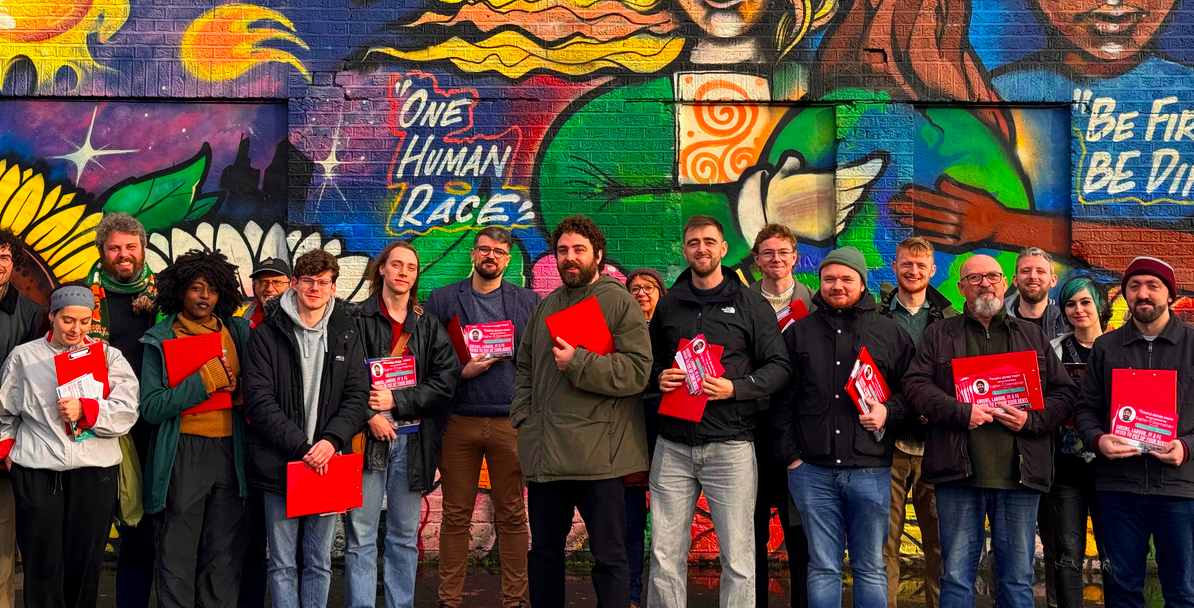
This is the central lesson of the Dublin by-election. Eoghan Ó Ceannabháin increased our vote share by more than half, on a lower turnout and in a contest where pundits wrote us off and RTÉ excluded us from the debates. We ran a campaign over six months built on local organising, relationship-building and steady, consistent dialogue with communities, on council rents, the defence of cultural spaces, Palestine and neutrality, the questions that actually shape life in the constituency. Four packed public meetings on council rents in the north inner city deepened our roots in communities, opening the door to future work in these areas. The campaign had real life and colour to it beyond the doorsteps too, from a packed-out gig in the Button Factory to the Irish language running through the whole thing, a reminder that our politics is best when it is vibrant and human. The increase in our vote is the early fruit of a new approach - an approach similar to the strategy that delivered success in Dublin North West and an increase in our vote in Dublin South West at the last General election. There is much more to be won, for us and for working class communities in Dublin Central if we stick with it.
Galway West tells a quieter version of the same story. Our result there was modest, but Denman Rooke and the local members ran a campaign that did real work, building the branch, making connections across the constituency and putting down roots for future campaigns to grow from. A by-election is rarely won from a standing start, and the value of contesting one often lies in what it leaves behind. The Galway branch have inserted themselves into important spaces within the constituency - the fight for housing, against erosion of Gaeltacht areas, for preservation of space for the arts and culture (e.g. Pálás cinema) and for better public transport in the City. With support, there is room for the branch to grow and consolidate itself in the political landscape of Galway West.
All of this points to the central task in front of People Before Profit, which is to build healthy branches that understand their job as developing relationships, confidence and influence where they are. A branch that only meets to discuss the news or plan a stall is not going far enough. Not every branch will be able to do the kind of work that Dublin Central did, but there are always ways to build relationships, win influence with new people and push outwards. The work is to find where people are angry and under pressure, to identify the people others already trust in a workplace, an estate or a local campaign, and to connect them up so that frustration can be turned into collective action.
Council rent and housing campaigns, Palestine solidarity, anti-racist work and local fights over services are not a distraction from electoral politics, they are the ground which electoral breakthroughs grow from. Elections let us put socialist arguments on a national stage, while campaigns let people feel their own power directly. We need both, because electoral work without roots becomes thin and local work without politics narrows into parochialism.
What we do Now
None of this is settled. The centre is weaker than it has been in a century. The soft left is growing but faces major political obstacles as the world becomes more unstable. Sinn Féin is pulled both ways at once. And the right is a serious threat. People Before Profit can grow in the middle of all of this, but only where its politics and its organising feed each other: the politics giving the work its direction, the work giving the politics its reach.
That is the work in front of us: leading the fights on rents, housing and the cost of living, building branches that root themselves in their areas, and communicating socialist politics plainly and without apology. People's anger will find a home one way or another, and if we are not there to give it one, the right will.