

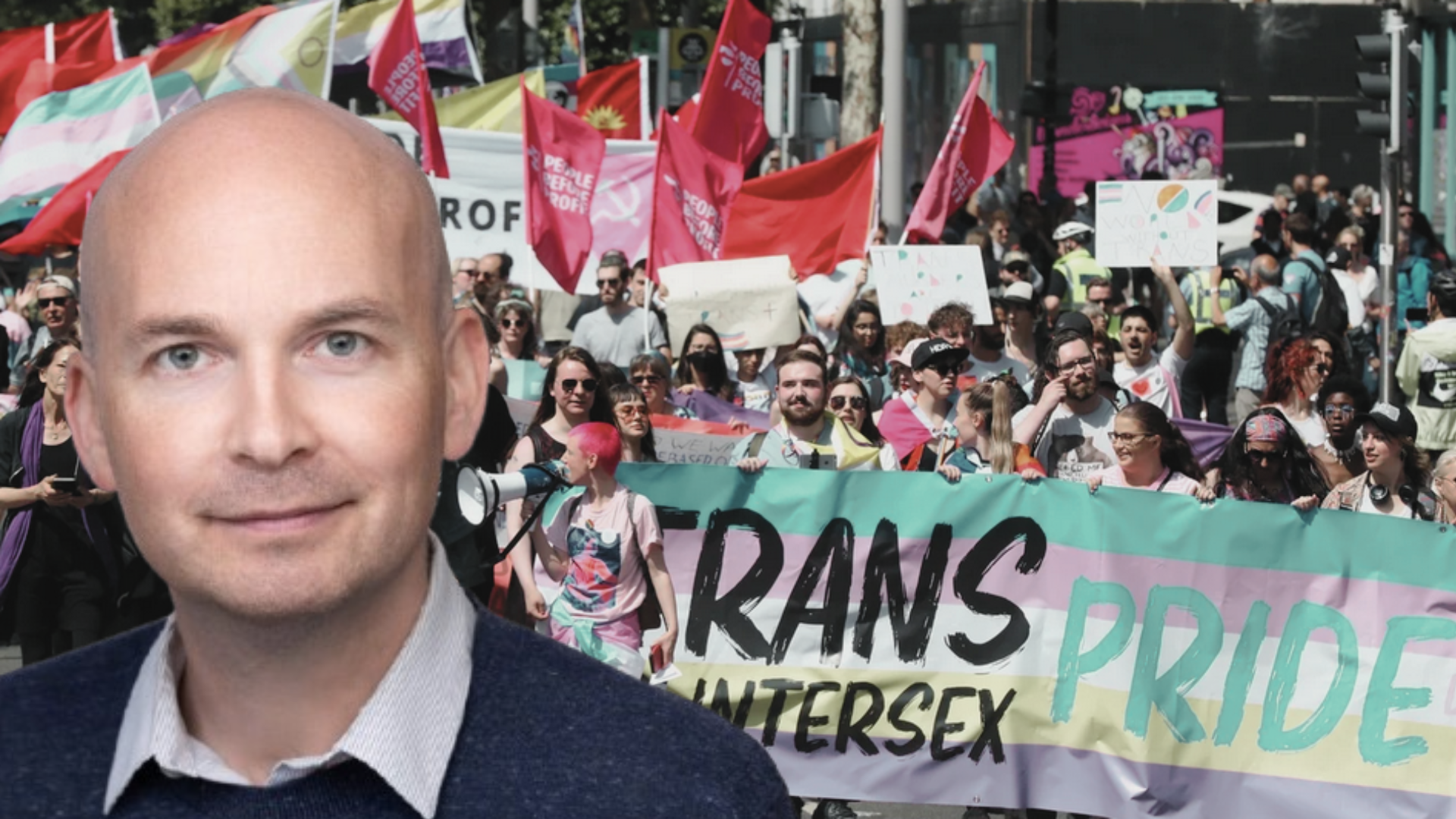
Speaking on a Trans Healthcare motion in the Dáil this week, Paul Murphy said:
“My thanks for the tireless activism of many trans activists, including those in Transgress the NGS, Trans Healthcare Action and TENI, who are pushing for rights to mean something and for decent healthcare in this country for trans people.
“It should be clear to anyone paying attention that the Government is no friend, or certainly no guaranteed friend, of trans people. We see the dog-whistling that is going on in terms of migrants, asylum seekers in particular, and any marginalised group.
“That is why the activism from below pushing for rights to mean something and for decent healthcare is so important to understanding that an injury to one is an injury to all and that in fighting for trans healthcare, we are fighting for a decent national health service that provides quality public healthcare for everybody in this country, regardless of their needs.
“The truth is Ireland is failing badly. We are the worst country in the European Union for availability and accessibility of transgender healthcare. We have one gender clinic offering transgender healthcare to adults in Ireland and that is the self-appointed National Gender Service based in St. Columcille's Hospital in Loughlinstown. It has wait lists over ten years long and sees fewer than 160 people a year.
“The National Gender Service (NGS) and its model of care were not approved by the HSE or the Department of Health. The service's name was chosen by itself.
“It is no surprise that there were no trans voices involved in the creation of the NGS. Those running it do trans people a disservice by lobbying against any reform of this broken system that treats trans healthcare as something to be restricted and pathologised.
“In this clinic, transgender people must undergo a dehumanising and humiliating assessment process. They are asked inappropriate and invasive questions that have very little to do with gender identity or medical transition. In some instances, trans people have been denied important gender-affirming healthcare if they were diagnosed with ADHD or autism or for not answering inappropriate and sexualised questions in a way deemed correct by the clinic.
“This is not the type of approach we should have. We should have an informed, consent-based transgender healthcare model led by GPs and nursing staff in primary care. We should look to Catalonia, which has an informed consent model in primary care that has been successfully in use since 2012, with a 36-day waiting list and 71% of adults receiving HRT on the first appointment, compared with the decade-long waiting list trans people face in Ireland”.