

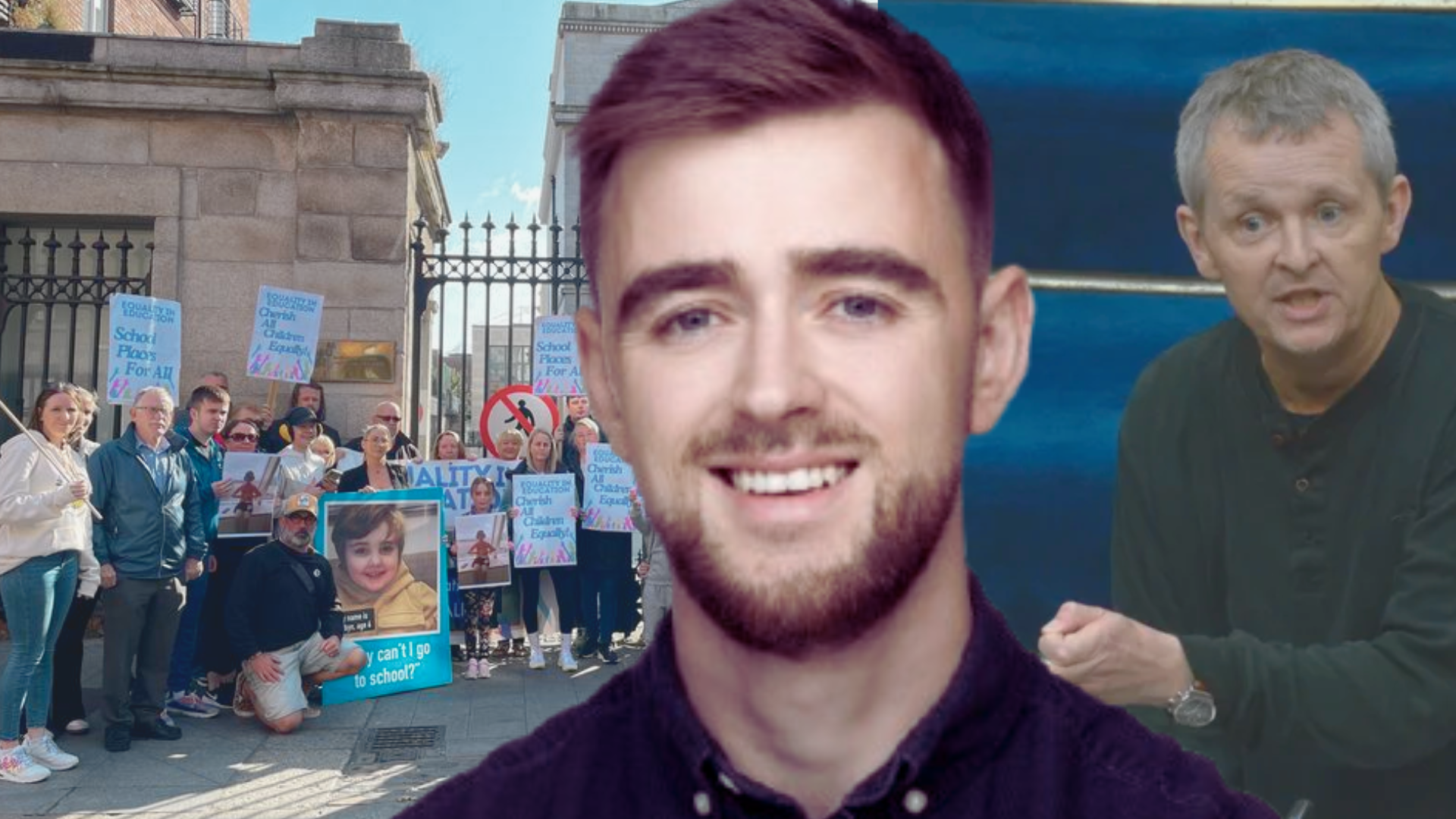
People Before Profit has criticised the Minister for Education’s written replies to a series of parliamentary questions submitted by Deputy Richard Boyd Barrett. These questions were submitted following discussions with parents across Dublin and with Councillor Conor Reddy, who has been leading People Before Profit’s work on the crisis in special education in Dublin North West. The replies reveal a system that is still operating year to year, with no real long-term planning, no clarity about the scale of need and no specific commitments for the areas under the most pressure.
What the answers show:
- The Department can only outline plans as far as September 2026. There is no multi-annual plan for new places, new buildings, or workforce expansion.
- Although the Department says that new schools are meant to include SEN classrooms, the replies do not show how often this is actually happening in practice.
- There is no confirmation of any new post-primary or special school places for Dublin North West in 2026, despite two years of severe shortages.
- No data was provided on how many parents submitted the NCSE expression-of-interest form for 2026. The form has now been removed from the website, and there is no clear alternative for parents who need places in 2026 to register their interest.
- There is still only one early-intervention setting in Dublin 11 under the Home Tuition scheme, and the replies do not set out any new early-intervention places for Dublin 9 or Dublin 11.
- Key questions about staffing levels in school transport and the processing of applications were not directly answered.
Cllr Conor Reddy said: “It is remarkable how little clarity is contained in these replies. All across the country, parents are left every single year trying to secure a place for their child at the last minute. The Minister avoided the central questions. There is no detail on long-term planning, no figures about demand and no clear information on how parents can engage with the NCSE now that the expression-of-interest form has gone. Families need certainty. We are nowhere near that point under this Government.
“The situation in Dublin North West is especially serious. The Minister could not confirm a single new post-primary or special school place for 2026 in an area that has had one of the worst shortages in the country. This is exactly why I got involved in organising around special education. We had more than 120 parents at one meeting in Finglas, over 100 at another and 70 in Ballymun. The need is obvious and it is urgent.
“Early-intervention places like PALS Preschool are overwhelmed. Even the new primary classes coming on stream barely touch the real level of need. Without proper long-term planning, including investment in buildings, teachers, SNAs, therapists and psychologists, this crisis will repeat in 2026, 2027 and beyond.”
People Before Profit are calling for:
- A national, multi-year plan for SEN places up to 2030
- A capital programme for new special schools and special classes - in PBP’s fully costed Alternative Budget for 2026 the party proposed to double capital spending for primary and post-primary schools to accelerate the school building programme and provide space for additional special classes
- A workforce plan covering SNAs, special education teachers, therapists and psychologists - in PBP’s fully costed Alternative Budget for 2026 the party included proposals to increase the number of Special Needs Assistants by 3,000, Special Education Teachers by 1,500, and psychologist in NEPS by 50%
- Expansion of early-intervention provision in Dublin North West and other high-pressure areas
- Transparency from the NCSE on data and decision-making
Councillor Reddy added that “crisis management cannot be the model for special education. Families deserve a system that plans ahead.”