

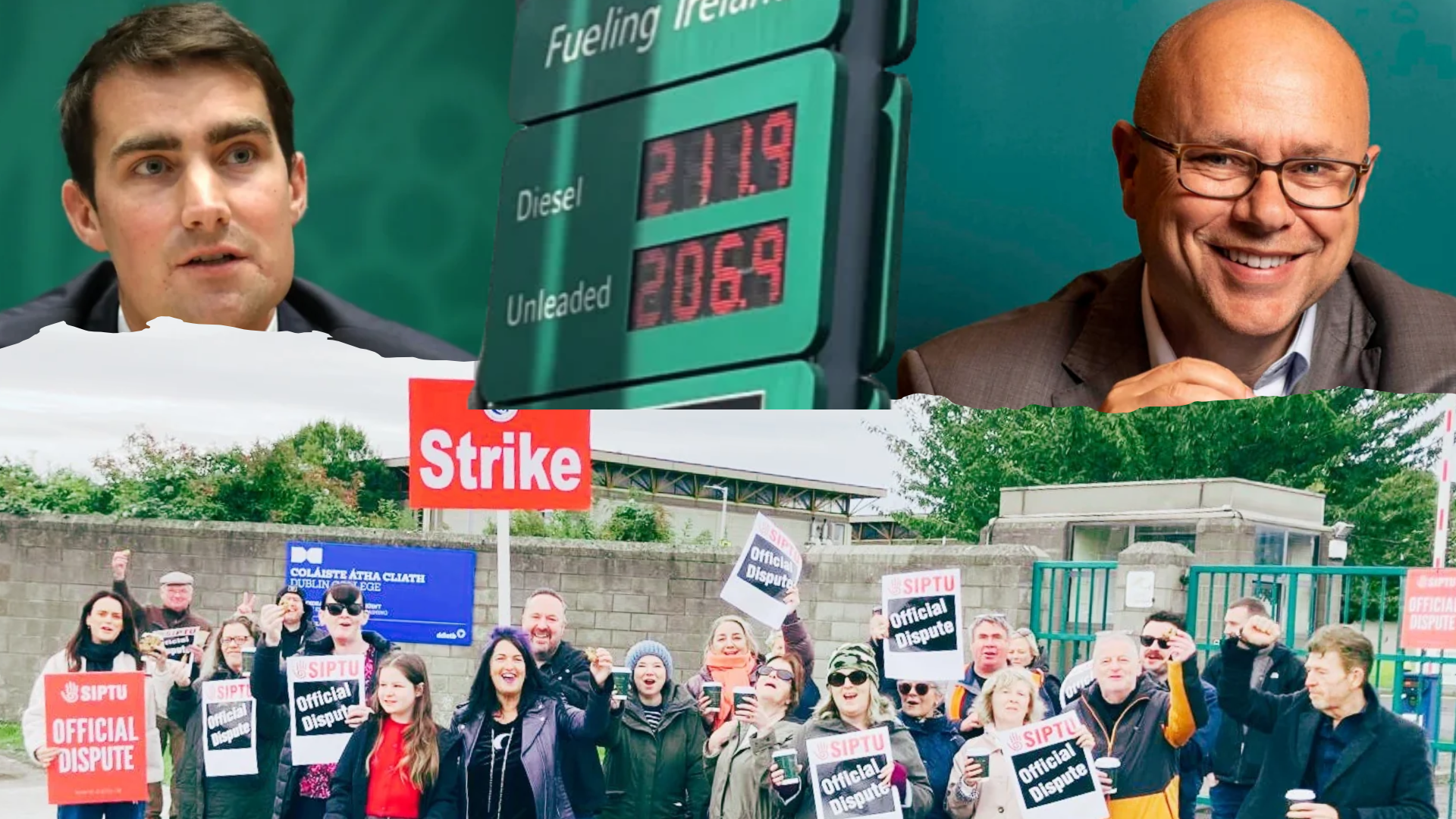
New figures from the Central Statistics Office show that wholesale electricity prices soared by 101.3% in October compared to the same time last year, as the war in the Middle East continues. In the last month, electricity prices rose by 11.3%. The figures show that all Energy Fuels jumped by 54.5% in October compared with the same month last year, while they rose by 4% on a monthly basis.
Eventually these will feed through to consumers. We will all be paying more for electricity and energy products. This will quickly eat into the paltry increases in the proposed public sector agreement. Energy fuel price increases will also lead to increases in food prices. If we can be sure about one thing, it’s that prices will continue to rise.
Workers should remember that on the day the public sector deal was announced we learned that inflation was up again: it is now 4.3%
Mortgage Payments UP 11%
Electricity UP 16%
Home Heating Oil UP 74%
Diesel UP 28%
Petrol UP 16%
And grocery prices keep going up too.
What Are The Unions Saying?
Literature circulated by the union offices, including a briefing note from the unions think tank NERI, claims that inflation will average 3.6% in 2026. It also gives two scenarios where inflation is either 7.2% or 8% over the agreement. It claims
“All workers gain a minimum of 11.27% over the 33 months. This converts into projected real wage growth of 3.8% under the baseline scenario (7.2% and 3% under the slower disinflation scenario (8%). In each scenario the annual improvement in real wages will exceed 1%.”
I am sure workers will be dancing in the streets at the idea that their pay will improve by 1% a year. This deal will just about keep your head above water. And just hope you are not hit by any major emergency because you won’t be able to save much with these pay increases. The chances of young people saving to get into the housing market won’t be improved by this deal.
And remember, too, that these increases are conditional on cooperation with change and “sustained reform” of public services. It seems astonishing that unions would push a deal that has such paltry gains.
But there is no guarantee that these gains will be delivered:
- They claim inflation will average 3.6% in 2026. But that does not reflect the increase in prices already in 2026. Without being too technical, it’s important to point out that they use the annual average inflation figure announced for each month to predict their annual average of 3.6%. But that does not reflect the real increases in prices over 2026, which are already 4%, as you can see in the table below, based on CSO figures. Given current trends, there is no possibility that prices will rise less than 4% in 2026.
- Workers are being offered 2% from September 2026 to compensate for rising prices this year. But that only lifts your income for the whole year by 0.7%. Even when added to the 2% (1% in February and 1% in June) paid under the last agreement your total income for the year rises by 2.2%, much less than the 4% plus increase in prices.
- It is claimed the deal is worth 11.27% but that includes 1% local bargaining that not everyone will get. Some workers are still waiting for their local bargaining from the last agreement. If you accept the NERI inflation figures, the only guaranteed gain is 10.27% meaning you get less then the 1% a year in real terms.
- There is no reference by NERI to the 5% workers have lost since 2021. The unions made a big deal of this before the talks but delivered nothing. Less than a 1% real increase a year does not compensate for this.
- In 2027 workers are due to get 3.5%, but in small chunks spread over the year. NERI claims, based on estimates from different organisations, that inflation will average 3.1%. Yet earlier on in the year the Central Bank claimed inflation could be as high as 5% in a severe scenario based on continued high energy costs. The figures quoted above suggest energy prices will continue to rise.
What Review?
NERI claims that “While more extreme scenarios for inflation are possible it can be noted that major downside and upside inflation scenarios are effectively covered by the break clause”. They are referring to the review clause that can be triggered if the basic assumptions (including the assumptions regarding inflation) change significantly during the agreement. This is not a guarantee of more money if inflation keeps going up.
We don’t know what the basic assumptions were (they are not in the agreement), and we don’t know what “significant” means. It’s also open to the Government to seek to change the agreement if the economy contracts.
There is no requirement in the deal for the government to give more.
It’s Possible to Get More
Union members have shown they are prepared to take action to get real pay increases. Many workers joined a union when they saw unions were serious about addressing the cost of living crisis. Members should now send a clear message to their union leaders that this deal is not good enough and, I would argue, NERI’s figures show that.
The government has the money. Send the union leaders back to get more of it. Vote NO.